North Carolina’s farms are more than part of our heritage. They are a critical piece of our state’s economic infrastructure. From local food production to job creation, agriculture remains North Carolina’s top industry.
Thanks to the Agricultural Development and Farmland Preservation Trust Fund (ADFPTF), farmers can work with their local land trust or county soil and water conservation district to create conservation easements that protect their land and livelihoods. Investing in these projects means investing in agriculture, local economies, and the long-term success of our state.
ADFPTF has enabled farmland preservation across the state, protecting thousands of acres. As more people have moved to North Carolina, especially over the past five years, ADFPTF’s momentum has created a pipeline of farmers interested in preserving their land, as evidenced by the program’s demand.
Increased funding for ADFPTF is critical to investing in North Carolina agriculture and ensuring we grow sustainably. Funding for conservation easements through this ADFPTF provides farmers with actual cash when they need it, as land values rise and development offers become harder to resist. Increasing ADFPTF’s recurring funding to match the other state conservation trust funds is a necessary step to secure North Carolina’s agricultural heritage and invest in the future of our agricultural economy.
With the current funding levels, our agricultural land is under growing pressure. As development accelerates across the state, especially in fast-growing regions like the Triangle, farmland is being lost at an alarming rate.
The question facing policymakers is clear:
How do we balance growth while protecting the working lands that support our economy and way of life?
A recent project in Lee County offers a clear, practical answer.
Protecting Farms Protects Local Economies
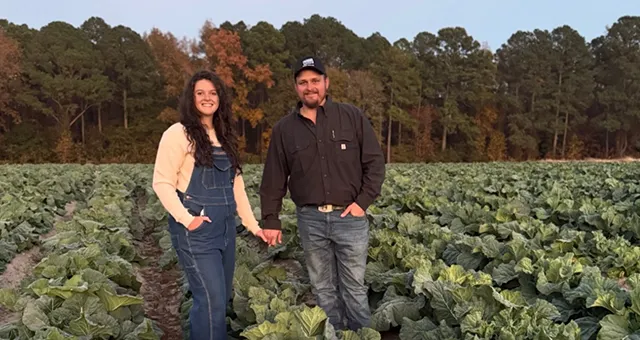
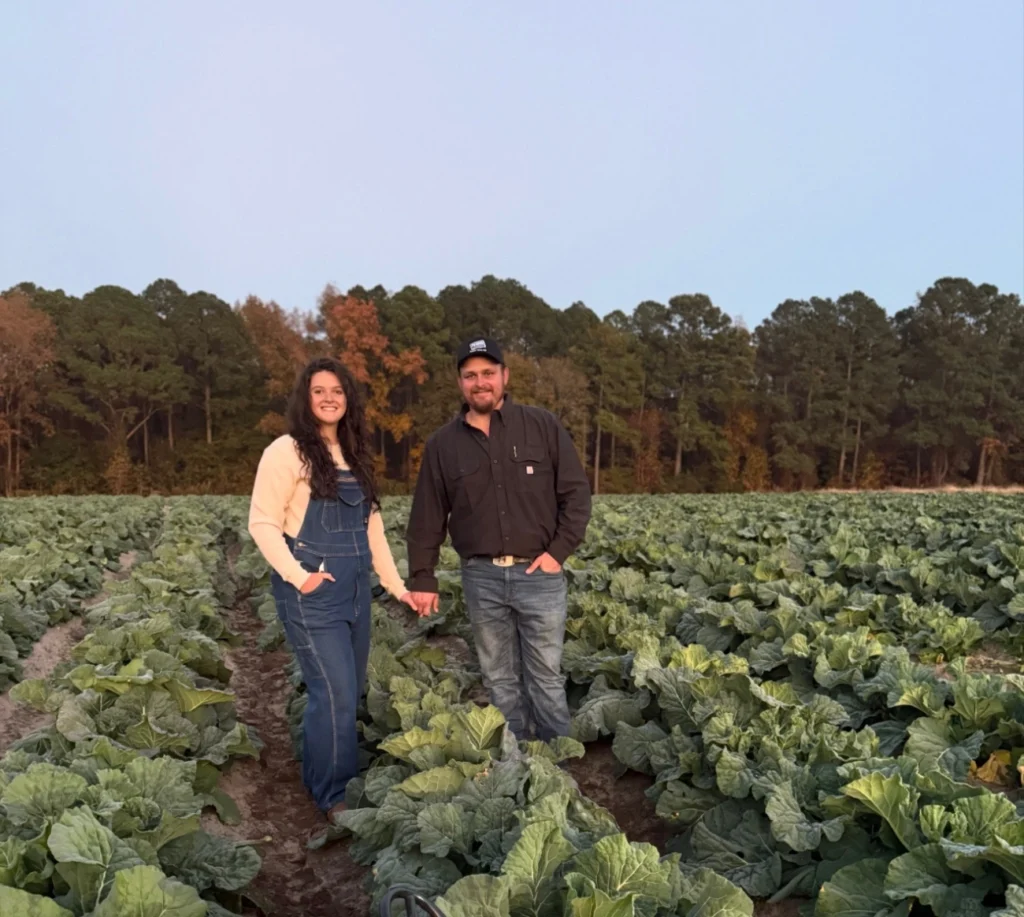 In December 2025, Triangle Land Conservancy (TLC) protected 75 acres of working farmland on the Ayers Family Farm in Cameron, which is deep in the heart of southern Lee County. This project was made possible through funding from ADFPTF.
This is not just a land conservation story. It is an economic one. Inspired by their families’ farming heritage in Lee County, Hunter and Aaron Ayers knew they wanted to start their own family farm. They purchased the 75-acre tract in 2022 and immediately looked into conservation easements as a way to offset the cost and secure funds for their operation. The Ayers’ farm produces a wide range of crops and raises livestock. And by selling at their local farmers market and at local grocery stores like Piggly Wiggly, the Ayers are emphasizing the importance of community-based agriculture. This kind of local agriculture keeps dollars circulating in the community, supports small businesses, and strengthens local food systems.
“As a community, we need to realize that working together to perpetuate woodlands and farmland is the only way to be successful. The value added to the tract for the next generation is immense,” said the Ayers.
“I love meeting the landowners that care about their land,” Melissa Clunan, Land Protection Manager at TLC, said. “The Ayers are unique in that they are young farmers who know they want to farm their entire careers. They are committed to keeping this land exactly as it is.”
See Ayers Family Farm in Action:
Facebook: https://www.facebook.com/p/Ayers-Family-Farm-100094378571812/
Instagram: https://www.instagram.com/ayersfamilyfarmnc/
YouTube: https://www.instagram.com/ayersfamilyfarmnc/
At the same time, farmland in Lee County declined by 11% between 2017 and 2022. While the number of farms increased, average farm size decreased, indicating that farms are being subdivided and large-scale agriculture is becoming more difficult. Without strategic investment, this trend will continue.
Local Impact: What This Means for Lee County
The Ayers Family Farm sits in a part of Lee County experiencing rapid change and at real risk for development. Within just five miles of the property, at least four new subdivisions are under development. Instead, it is now permanently protected and will remain a working farm for generations.
“Development pressure is increasing exponentially in Lee County. Land values are still relatively low compared to the rest of the Triangle, which has attracted large-scale industries such as pharmaceutical companies,” said Clunan. “The proximity to Holly Springs and Apex to the north of the county, and Pinehurst and Fort Bragg to the south, is causing increased residential development to spread from both sides. The land the Ayers protected with an easement had another offer from a developer, but it fell through, and the Ayers were able to purchase the farm.”
This project also marked the first time Lee County’s Farmland Preservation and Protection Fund was used, helping cover transaction costs and strengthening the overall funding package.
According to Clunan, timing was critical. “I think the timing of the county’s investment is really significant because it is proactive. The county commissioners and the community can see that growth is ramping up similarly to other counties in our region.”
Local investment like this does more than protect one farm. It positions counties to compete for additional state and federal funding, bringing more resources back to the community.
Strategic Importance: Agriculture, Growth, and Long-Term Planning
 Lee County is at the crossroads of major growth corridors, with pressure coming from the Triangle to the north and military and residential expansion to the south.
According to the American Farmland Trust, the county could lose up to 30 percent of its farmland by 2040. Read more about this real risk to our state.
“North Carolina as a whole is projected to lose 1,197,300 acres to development by 2040, making it the second-most threatened state in the nation for farmland loss, behind only Texas,” said Clunan. “This is a critical time to invest in farmland preservation to achieve balanced growth that will sustain a healthy future for the Triangle.”
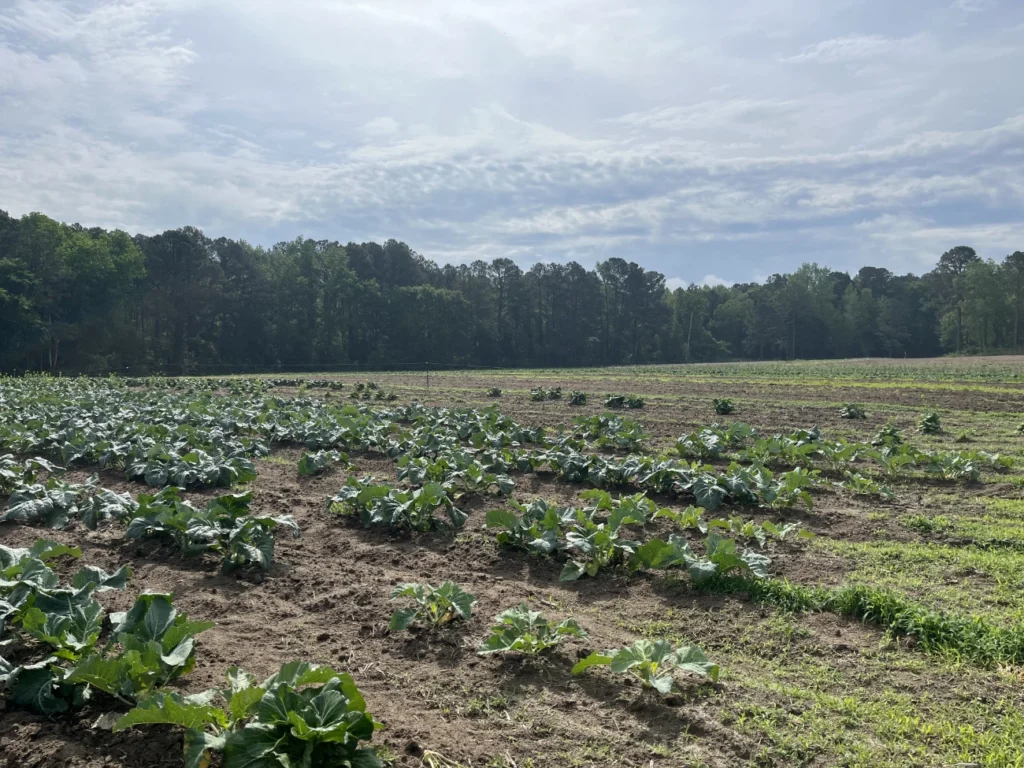
This is not just about land. It is about long-term planning. The Ayers farm is a combination of crop fields and mixed hardwood and pine forest, with a stream running through it. Along with this scenic open space, 80% of the farm is on prime soils or soils of statewide importance, making it among the most productive for agriculture. Losing this farm to development would cost North Carolina critical farmland, local food, wildlife habitat, and water quality protection, as well as important agricultural heritage.
Once developed, they are gone for good. Protecting working lands ensures that North Carolina can continue to produce food, support rural economies, and maintain the balance between growth and preservation that makes our state strong.
Lee County has a rich agricultural heritage, and the Ayers have a deep respect for that. “The hard work put into this sandy land is evident, and we want to continue the legacy started by not only our ancestors, but all of Lee County farmers,” explained Hunter and Aaron Ayers.
With the permanent protection of this property, the Ayers land will be able to remain a farm forever.
Fiscal Responsibility: A Proven, Leveraged Investment
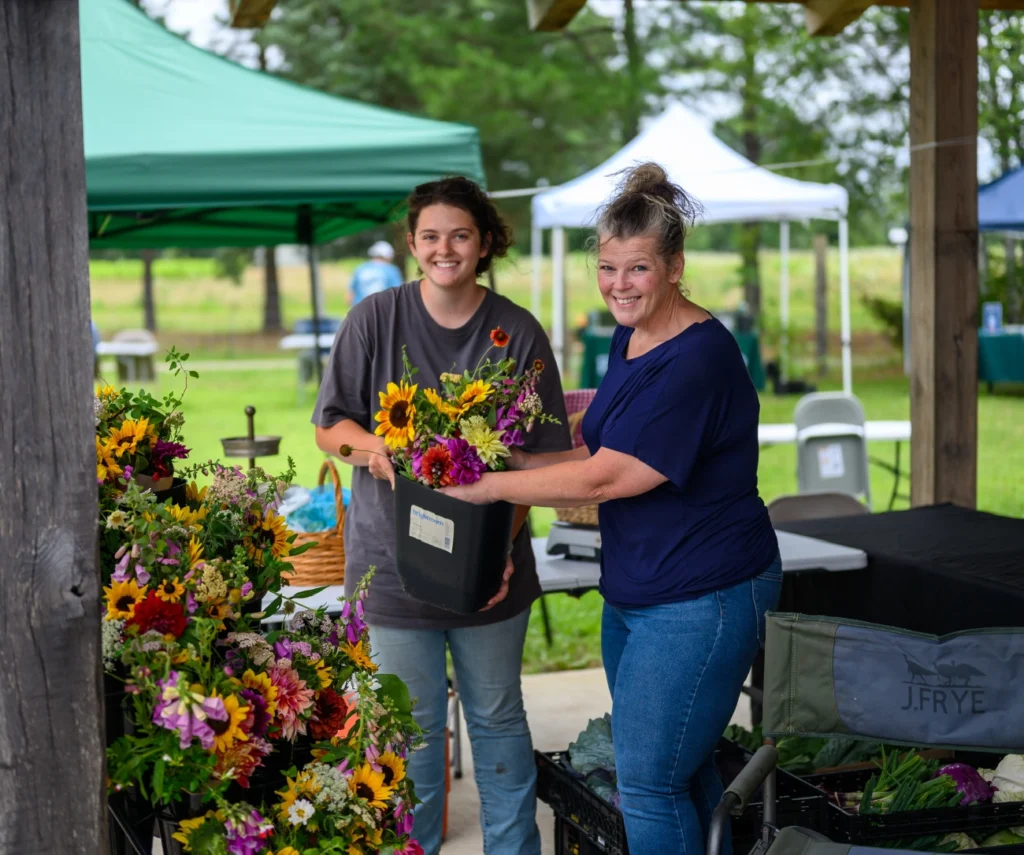 The Ayers Family Farm project highlights how conservation funding works in practice. ADFPTF provided the funding needed for them to place the farm under easement, securing it forever. Lee County added support through its local farmland fund.
ADFPTF funding made the Ayers Family Farm project possible by funding the entire easement purchase, matched with a generous 25% bargain sale from the Ayers. This means that with ADFPTF support, TLC was able to provide the Ayers with a cash payment for their easement, which was critical for them as young, early-career farmers who needed funding to grow their farm operation. This is a true partnership. State funding does not act alone. It brings together local governments, landowners, and private contributions to make projects possible.
In this case, state support was essential. Without funding from the trust fund, the project would not have moved forward. While the Ayers were committed to keeping their land in agriculture, they needed financial support to place a permanent easement on the property. Development offers were already on the table.
Demand for this program continues to grow. In the most recent funding cycle, more than 100 applications were submitted, totaling nearly $50 million in requests. Only seven projects were funded.
That gap represents farms across North Carolina that could be protected if resources were available.
A Practical Investment in North Carolina’s Future
The Ayers Family Farm is one example, but it reflects a broader reality across North Carolina.
Farmers want to protect their land. Communities want to maintain their rural character. Local governments are stepping up with support. But without consistent and sufficient state funding, many of these opportunities will be lost.
Conservation trust funds are not optional. They are a proven tool for protecting one of North Carolina’s most important economic sectors.
Among NC’s conservation trust funds, ADFPTF has the lowest recurring funding. This year, Land for Tomorrow is asking legislators to increase recurring funding for ADFPTF to $25 million from $5 million, enabling many more land protection projects to move forward. This increase would be a significant step toward meeting demand for funding for farmland projects and toward investing in one of North Carolina’s largest economies.
As Clunan shared, there is already a strong pipeline of farmers ready to participate. The need is clear. The demand is growing. The opportunity is now.
North Carolina’s farms are more than open land. They are a cornerstone of our economy, our heritage, and our communities. As development pressures continue to grow, protecting working farmland is a practical investment in the state’s long-term success.
The Agricultural Development and Farmland Preservation Trust Fund helps keep farms in production, supports family farmers, and strengthens local economies across North Carolina. These projects ensure that agricultural land remains productive, supports nearby military installations, and contributes to the stability of rural communities.
Increasing ADFPTF funding will allow TLC and other land trusts and counties across the state to expand land protection momentum and protect more critical farms and natural lands. “We can’t wait,” said Clunan. “North Carolina is consistently one of the fastest-growing states in the country, with people relocating here for our great schools, career opportunities, and natural beauty. Conservation easements are the best tool for permanent protection of working lands, and increasing funding for ADFPTF will enable us to ensure a sustainable future for North Carolina.”
Land for Tomorrow and its partners are seeing firsthand how conservation trust funds deliver real results in every region of the state. But the demand for these projects continues to outpace available funding.
To keep North Carolina’s farms working and communities strong, continued and increased investment in the Agricultural Development and Farmland Preservation Trust Fund is essential. It is a fiscally responsible approach that leverages public and private dollars, protects a key industry, and preserves the lands that define our state.
Investing in conservation trust funds is an investment in North Carolina’s economy, its people, and its future.