NC Conservation Tax Credit: How Landowners Can Save by Protecting Their Land

North Carolina landowners have more time to take advantage of a valuable incentive that can lower their state taxes while permanently protecting their farms, forests, and other natural lands.

The Conservation Tax Credit has been extended until 2030, giving more families the opportunity to explore whether it fits their land and financial goals.

The North Carolina Conservation Tax Credit rewards landowners who choose to preserve farmland, forestland, wildlife habitat, and other valuable landscapes. The program provides a state income tax credit of up to 25% of the fair market value of donated land or conservation easements. That means landowners can receive a tax break worth up to $250,000 for individuals and $500,000 for C Corporations when they permanently donate qualifying property. Credits received may vary depending on the number of qualified applicants.

This isn’t just good for landowners; it’s good for North Carolina. For thirty years, from 1983 to 2013, this program helped protect over 262,000 acres across our state. It was a smart investment, too: for every dollar in tax credit issued, at least six dollars’ worth of critical land in North Carolina was conserved. Now, thanks to action from the General Assembly, the program is back for qualifying donations made through 2030.

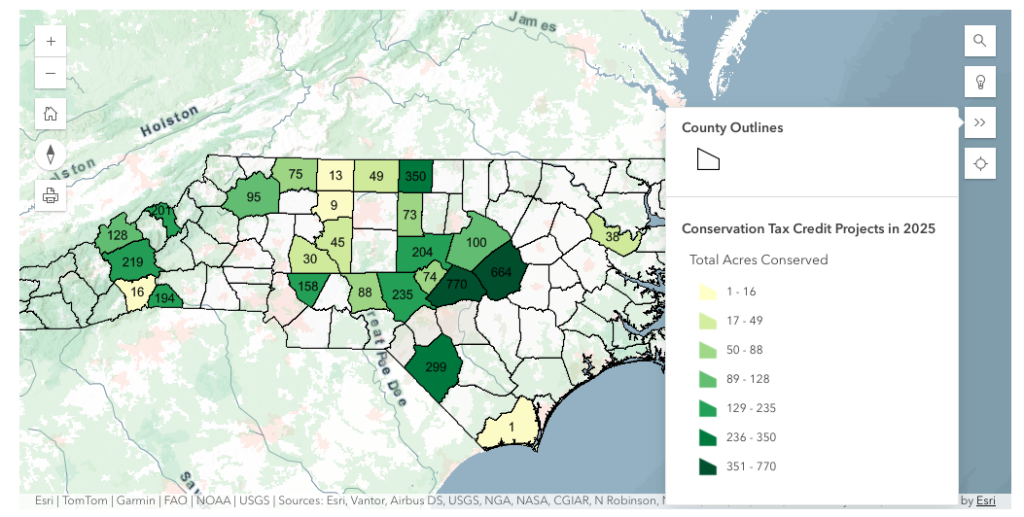
In 2025, the first year of its return, the credit helped conserve 4,128 acres across 25 counties in North Carolina, providing a variety of public benefits. Out of the acres conserved in 2025, 3,318 acres were for forestland and farmland preservation, 801 acres were for fish and wildlife conservation, and 9 acres were preserved for historical landscape conservation.

As a proud member of the Land for Tomorrow coalition, our organization helped advocate for the return and continuation of this tax credit. Alongside fellow conservation partners from across the state, we worked to show lawmakers how this program supports farmers, strengthens local economies, and protects the lands and waters that make North Carolina so special. We’re proud to have played a part in bringing this critical tool back to life.

Turning Conservation into a Legacy

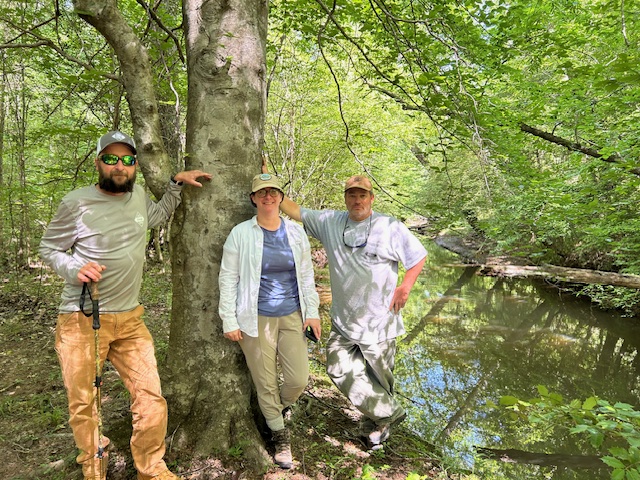
Scott McNeely is a landowner from Western North Carolina who has permanently protected three properties through conservation easements. He received a Conservation Tax Credit in 2025, the program’s most recent
application cycle. Land conservation is important to him and his family, who enjoy North Carolina’s natural spaces.

“I’m an avid hunter and fisherman, an outdoors person, and my wife is a horse fanatic, and so I think it’s very important that we preserve as much farmland or woodland in a natural state as we can, and have those places in the future, because if we don’t protect them now, they’ll be gone,” he said.

The conservation tax credit helped him preserve the land he so loves, and he believes that it is a great way for other landowners to do the same.

“I think the tax conservation credit is a great benefit to the entire public in North Carolina, not just the individual landowners, because if it motivates somebody to take action, then that’s one more piece of property that’s going to be more green space, whether it be for wildlife or visual pleasure,” he said.

What Is the North Carolina Conservation Tax Credit?

The Tax Credit offers a state income tax credit for donations of land or conservation easements made in perpetuity for conservation purposes, such as preserving working farmland, forestland, wildlife habitats, historic landscapes, or providing public access to trails. A landowner interested in the tax credit would begin by contacting a local land trust or nonprofit qualified to accept land donations and assist with the process. The NC Department of Natural and Cultural Resources (NCDNCR) must certify the land as providing a public benefit before the NC Department of Revenue approves a tax credit. The North Carolina Natural Heritage Program has set up a webpage with details: Conservation Tax Credit | NHP.

Who Can Benefit from the Conservation Tax Credit?

Donations must be made in perpetuity and serve a recognized conservation purpose, such as preserving working farmland or forestland, supporting wildlife conservation, protecting historic landscapes, or providing public access to trails. Special provisions also apply to floodplain protection in counties affected by recent natural disasters, as well as to land that buffers military bases and training areas.

Importantly, the program isn’t first-come, first-served. All eligible, certified applications received for a given year will be considered together, and tax credits will be distributed proportionally if the total demand exceeds the $5 million annual program cap. Donations of farmland and forestland will receive priority consideration for the first $3.25 million in credits each year.

It’s important to know that: All approved applications from the same year will be reviewed at the same time. If the total amount of tax credits requested exceeds the $5 million limit for the year, each person will receive a smaller share of the remaining credits. Donations of farmland and forestland will be given priority for the first $3.25 million in tax credits each year.

Understand the Conservation Tax Credit process with this 2-pager 

How to Apply for the NC Conservation Tax Credit

Donations made at any time in a year are eligible, as long as certification applications are submitted by January 15 of the following year and tax credit applications are filed by April 15 of the following year. Approved credits can then be used starting in the following tax year, which is filed two years after the donation is made.

While the program cannot guarantee the exact percentage of tax credit a landowner will receive, as this depends on the number of applicants, every certified donation will be awarded some level of credit. Protecting land is a reward in itself. You’re preserving something real, lasting, and beneficial to your community and our state for generations to come.

To learn more, contact the state program at ctc@dncr.nc.gov. Applications and detailed guidance are available on the NC Natural Heritage Program website. Visit this page for details: Conservation Tax Credit | NHP.

The Conservation Tax Credit is a chance to do something big – for your land, for your family, and for North Carolina. Let’s make the most of it.

Quick Facts:

  • North Carolina’s Conservation Tax Credit offers a state income tax credit for donations of land or conservation easements made in perpetuity for conservation purposes, such as preserving working farmland, forestland, wildlife habitats, historic landscapes, or providing public access to trails. Additional benefits apply to properties that protect floodplains in disaster-affected counties or buffer military installations. All donations must be permanent and meet state eligibility criteria to qualify.
  • The North Carolina Conservation Tax Credit allows landowners to claim up to 25% of the fair market value of the donated land or easement.
    • Individuals can receive up to $250,000
    • C Corporations can receive up to $500,000
  • All approved applications from the same year will be reviewed together. It is not first-come, first-served.
  • If the total amount of tax credits requested exceeds the $5 million limit for the year, each person will receive a smaller share of the remaining credits. Donations of farmland and forestland will be given priority for the first $3.25 million in tax credits each year.
  • Land and easement donations made any time in 2025 are eligible for the tax credit.
    • Application forms available in mid-July of each year
    • Certification deadline: January 15, the following year
    • Tax credit application deadline: April 15 the following year
    • Get detailed information: Conservation Tax Credit | NHP

Need help donating a conservation easement? Contact Your Local Land Trust!

To learn more, email the state program at ctc@dncr.nc.gov.


DISCLAIMER: This blog post is intended for general informational purposes only and does not constitute legal or tax advice. Landowners considering a donation of land or conservation easement should consult with a qualified tax advisor to understand the full implications of their donation and eligibility for the North Carolina Conservation Tax Credit. N.C governs the credit. General Statutes § 105-153.11 (for individuals) and § 105-130.34 (for C Corporations). Each land donation is unique, and eligibility, valuation, and final credit amount may vary based on individual circumstances and annual statewide limits.

Land for Tomorrow Thanks the NCGA For Its Investment in North Carolina’s Conservation Trust Funds

RALEIGH, N.C. — Land for Tomorrow thanks the North Carolina General Assembly for making a strong investment in the Agricultural Development and Farmland Preservation Trust Fund through the 2026 state budget while maintaining stable funding for the N.C. Land and Water Fund and the Parks and Recreation Trust Fund.

The budget strengthens North Carolina’s long-standing commitment to conservation by investing in three proven programs that deliver lasting benefits to communities across the state.

Agricultural Development and Farmland Preservation Trust Fund (ADFPTF)

The budget includes $2 million in new recurring funds, $46.9 million in nonrecurring funds, and $200,000 to Henderson County for farmland preservation through the Agricultural Development and Farmland Preservation Trust Fund (ADFPTF), helping farmers protect working lands that sustain North Carolina’s leading industry. Conserving farmland strengthens rural economies, supports food production, and preserves the agricultural heritage that defines communities across the state.

N.C. Land and Water Fund

The budget kept the funds steady for the N.C. Land and Water Fund, with an allocation of $28 million, which protects drinking water sources, conserves wildlife habitat, improves water quality, and supports flood resilience while helping local communities preserve the natural resources that drive economic growth and outdoor recreation.

Parks and Recreation Trust Fund (PARTF)

The budget provides for a slight reduction in recurring and nonrecurring funds, bringing the total allocation to the Parks and Recreation Trust Fund (PARTF) to $26 million, helping communities create and improve local parks, trails, playgrounds, and outdoor recreation facilities. These investments improve quality of life, expand public access to the outdoors, and support North Carolina’s $16.2 billion outdoor recreation economy.

“North Carolina’s conservation trust funds represent one of the smartest investments our state can make,” said Kevin Redding, Land for Tomorrow Chair and Executive Director, Piedmont Land Conservancy. “These programs protect the places that make North Carolina special while delivering real returns for taxpayers through cleaner water, stronger farms, thriving local parks, expanded outdoor recreation, and more resilient communities. We are grateful to the General Assembly for recognizing that conservation is an investment in our state’s economy, heritage, and future.”

This year’s budget follows another significant conservation milestone: the extension of North Carolina’s Conservation Tax Credit through 2031 in the NC Farm Act (SB 401). The extension provides landowners with greater certainty as they plan for the future and preserves a proven incentive to voluntarily protect working farms, forests, and other important lands. Combined with strong funding for the state’s conservation trust funds, North Carolina continues to demonstrate that practical, bipartisan conservation policies deliver lasting benefits for communities, agriculture, and future generations.

For decades, North Carolina’s conservation trust funds have helped leverage dollars to protect millions of acres of land, improve public access to recreation, conserve working farms and forests, safeguard drinking water supplies, and preserve places that define North Carolina’s history and identity.

Land for Tomorrow thanks members of the General Assembly from both parties for their continued leadership and support of these nationally recognized conservation programs. Together, these investments will help ensure North Carolina remains a great place to live, work, visit, and raise future generations.

About Land for Tomorrow

Land for Tomorrow is a statewide coalition dedicated to increasing public funding for North Carolina’s land and water conservation. The coalition is working to protect the lands and waters that support North Carolina’s economy, natural resources, and quality of life. Learn more at https://www.land4tomorrow.org.

Member Profile: Blue Ridge Conservancy

North Carolina’s conservation success depends on strong partnerships, and that is exactly what the Land for Tomorrow coalition makes possible.

Blue Ridge Conservancy is helping protect some of northwest North Carolina’s most important lands, from prime farmland and scenic Blue Ridge Parkway views to rare wildlife habitats and expanding trail systems like the Middle Fork Greenway and Northern Peaks State Trail. These efforts are made possible through support from North Carolina’s conservation trust funds and the power of statewide collaboration.

One major example is the Three Top Connector project in Ashe County, where a $1 million grant from the N.C. Land and Water Fund helped Blue Ridge Conservancy protect 335 acres and connect previously separated game lands across Three Top Mountain. Today, the project provides 6.5 miles of continuous protected game lands while safeguarding critical headwater streams and wildlife habitat.

But conservation is about more than individual projects. It is about building a stronger statewide network.

“Being a member of Land For Tomorrow helps us connect to other organizations working on the same types of projects in different areas of North Carolina that we might not otherwise interface with,” said David Ray, Executive Director of the Blue Ridge Conservancy.

“Being located in the northwest part of the state, without LFT we would not have nearly as much representation and voice at the state level.”

Land for Tomorrow brings together organizations from across North Carolina to ensure rural communities, working lands, outdoor recreation, and natural resources all have a voice in Raleigh. That coalition work helps secure the investments that keep North Carolina strong, connected, and prepared for future growth.

Bandera Farms Park in Guilford County

A $500,000 grant from the N.C. Parks and Recreation Trust Fund (PARTF) is helping bring Bandera Farms Park in Guilford County to life, transforming a community vision into a regional destination.

Slated to open in November 2026, the park spans 120 acres in a fast-growing area of Guilford County. It will feature natural surface trails for hikers and equestrians, an adventure playground, picnic shelters, access to the future Piedmont Greenway, and protected frontage along Reedy Fork Creek. Land for Tomorrow member Piedmont Land Conservancy played a pivotal role in making this project a success, purchasing and conserving the first tract of land in 2020 with contributions from four local governments, followed by the acquisition of an additional tract in 2023.

The PARTF grant awarded to the Town of Summerfield helped leverage additional investments, including federal, county, and local funding, to fully fund construction of this unique regional park. The project also protects important natural resources, including wildlife habitat and water quality within the Haw River watershed and Greensboro’s drinking water supply.

Thank you to Rep. John Blust, Rep. Alan Branson, and Sen. Phil Berger for supporting North Carolina’s conservation trust funds, including PARTF. These investments help communities create new recreational opportunities, protect natural resources, and improve the quality of life for residents and visitors alike.

Learn more about this project: https://www.piedmontland.org/future-bandera-farms-park/

Learn more about how conservation trust funds are making a difference across North Carolina at https://www.land4tomorrow.org/learn/

Member Profile: Piedmont Land Conservancy

North Carolina is growing fast. Since 2020, more than 709,000 people have moved to North Carolina, making our state one of the top destinations for new residents. As growth continues, continued investment in the conservation trust funds helps ensure that the lands and waters that define North Carolina are not lost to development.

Piedmont Land Conservancy is a powerful example of how these investments deliver results. One recent success is the 311-acre Mitchell River Preserve in Surry County. Supported by a $976,000 grant from the North Carolina Land and Water Fund, this project protects pristine river frontage, wildlife habitat, and water quality in one of North Carolina’s most significant watersheds. When completed, it will also provide new opportunities for public access and outdoor recreation.
To date, conservation trust fund investments have helped Piedmont Land Conservancy:

  • Permanently protect 5,100 acres of critical natural lands with $14.7 million from the North Carolina Land and Water Fund.
  • Protect 24 family farms and 3,051 acres of working farmland with $4.7 million from the Agricultural Development and Farmland Preservation Trust Fund.

Being part of Land for Tomorrow has truly amplified what Piedmont Land Conservancy can accomplish,” said Kevin Redding, Executive Director.

Pulling together with more than 20 conservation organizations in the coalition, we’ve been able to advocate more effectively for the trust funds that fuel our work with a unified statewide voice. That collective power translates directly into results that are shaping the future of conservation funding across North Carolina.”

This is the power of partnership. By working together through Land for Tomorrow, conservation organizations across North Carolina are helping secure the funding needed to protect clean water, support agriculture, expand outdoor recreation, and preserve the landscapes that strengthen our economy and quality of life.

Protecting North Carolina’s History, Water, and Communities at Fort Defiance

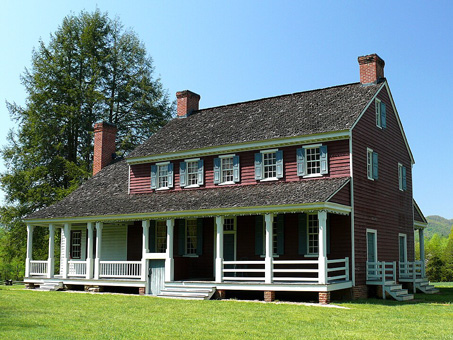
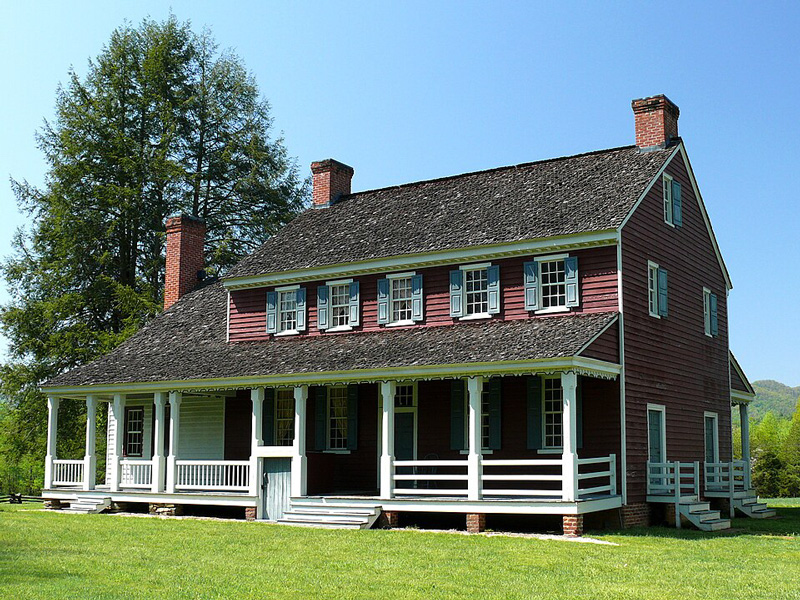
Nestled in the rolling farmland of Happy Valley, where the Yadkin River winds through the foothills of the Blue Ridge Mountains, Fort Defiance stands as one of Caldwell County’s most treasured historic landmarks.

Built in 1792 by Revolutionary War officer General William Lenoir, Fort Defiance served as his home and remains one of North Carolina’s most significant historic sites, offering a window into the state’s early frontier and Revolutionary War history. For generations, schoolchildren and visitors have come here to experience a landscape that connects North Carolina’s natural beauty with its rich Revolutionary War history.

Just beyond the historic site, 25 acres of undeveloped land help frame the views, protect the setting, and preserve the character of this unique place. Foothills Conservancy of North Carolina recently completed a project on these acres that demonstrates how North Carolina’s conservation trust funds protect the places that make North Carolina unique and ensure that protection for future generations.

“Supporting conservation funding in North Carolina is a wise investment that ensures the conservation of natural, historic, and cultural resources by protecting streams and water supplies, and providing residents and visitors with safe, beautiful areas to hike, bike, enjoy wildlife, and learn about North Carolina’s unique history,” said Tom Kenney, Foothills Conservancy of North Carolina Land Protection Director.

“In honor of America’s 250th birthday, conserving places like Fort Defiance allows us to honor our nation’s founding and the role North Carolinians played in securing independence. These investments help ensure that our history remains visible, accessible, and meaningful for generations to come.”

Senator Ted Alexander, Co-Chairman of the North Carolina General Assembly’s America’s 250th Committee

“I am especially gratified in this instance because my great aunt Mildred McDowell Jones was one of the principle driving forces behind the original preservation efforts of Fort Defiance in the 1960’s through the 1980’s. So this is a fitting continuation of the patriotic efforts of generations past who laid the groundwork for protecting our heritage we enjoy today,” said Senator Alexander.

Preserving a Piece of North Carolina History

Thanks to a NC Land and Water Fund grant, the Foothills Conservancy of North Carolina was able to permanently protect 25 acres of land adjacent to the Fort Defiance Historical Site. Located along NC Highway 268 near the Yadkin River, the protected property serves as a critical buffer for the Fort Defiance Historical Site and a key section of both the Overmountain Victory National Historic Trail and the Overmountain Victory North Carolina State Trail. Together, these landmarks tell the story of the Overmountain Men and their role in securing a pivotal victory during the American Revolution.

By conserving this property, North Carolina helps ensure that future generations can continue to experience the landscapes where history unfolded.

Protecting Natural Resources That Benefit Communities

The benefits of this project extend beyond historic preservation. The protected land helps safeguard the Yadkin River watershed and contributes to the protection of downstream drinking water supplies, including Kerr Reservoir. Conserving land along rivers and streams is one of the most cost-effective ways to protect water quality while reducing future infrastructure and treatment costs. The project also preserves open space, scenic views, and opportunities for outdoor recreation, all of which contribute to the quality of life valued by residents throughout Caldwell County.

A Smart Investment in Local Economies

Historic sites and outdoor recreation destinations bring visitors to local communities, supporting restaurants, hotels, retail businesses, and other local employers. Across North Carolina, outdoor recreation generates $16.2 billion in economic value annually and supports more than 145,000 jobs, underscoring the economic benefits of investments in trails, historic sites, and public access. Projects like this demonstrate how conservation funding serves as an investment in both community assets and economic development.

State Conservation Funding Made the Project Possible

This project would not have been possible without support from the N.C. Land and Water Fund and the North Carolina Complete the Trails Program. Funding helped cover land acquisition, transaction expenses, and long-term stewardship costs. Without these state investments, the project would likely not have moved forward.

Why Continued Investment Matters

Across North Carolina, communities are working to protect important historic sites, working lands, parks, trails, water resources, and natural areas. Yet many of these opportunities are time-sensitive. Once land is developed, the opportunity to conserve it is often lost forever.

“NC LWF investments support projects like Fort Defiance, which has a significant historical heritage, as well as natural resources like open space for recreation, water protection, and watershed protection,” said Kenney. “Without these investments, many of these projects would not be possible, leaving properties more susceptible to development.”

An Investment in North Carolina’s Future

North Carolina’s conservation trust funds have a proven record of delivering results in communities across the state. They help leverage partnerships, support local priorities, and protect the natural and historic resources that make North Carolina a great place to live, work, and visit.

Continued investment in the N.C. Land and Water Fund will help ensure that projects like Fort Defiance remain possible for future generations, preserving the places that define North Carolina’s history, strengthening its economy, and protecting its way of life.

Protecting North Carolina’s Working Lands Is a Smart Investment in Our Economy

North Carolina’s farms are more than part of our heritage. They are a critical piece of our state’s economic infrastructure. From local food production to job creation, agriculture remains North Carolina’s top industry.

Thanks to the Agricultural Development and Farmland Preservation Trust Fund (ADFPTF), farmers can work with their local land trust or county soil and water conservation district to create conservation easements that protect their land and livelihoods. Investing in these projects means investing in agriculture, local economies, and the long-term success of our state.

ADFPTF has enabled farmland preservation across the state, protecting thousands of acres. As more people have moved to North Carolina, especially over the past five years, ADFPTF’s momentum has created a pipeline of farmers interested in preserving their land, as evidenced by the program’s demand.

Increased funding for ADFPTF is critical to investing in North Carolina agriculture and ensuring we grow sustainably. Funding for conservation easements through this ADFPTF provides farmers with actual cash when they need it, as land values rise and development offers become harder to resist. Increasing ADFPTF’s recurring funding to match the other state conservation trust funds is a necessary step to secure North Carolina’s agricultural heritage and invest in the future of our agricultural economy.

With the current funding levels, our agricultural land is under growing pressure. As development accelerates across the state, especially in fast-growing regions like the Triangle, farmland is being lost at an alarming rate.

The question facing policymakers is clear:

How do we balance growth while protecting the working lands that support our economy and way of life?

A recent project in Lee County offers a clear, practical answer.

Protecting Farms Protects Local Economies

In December 2025, Triangle Land Conservancy (TLC) protected 75 acres of working farmland on the Ayers Family Farm in Cameron, which is deep in the heart of southern Lee County. This project was made possible through funding from ADFPTF.
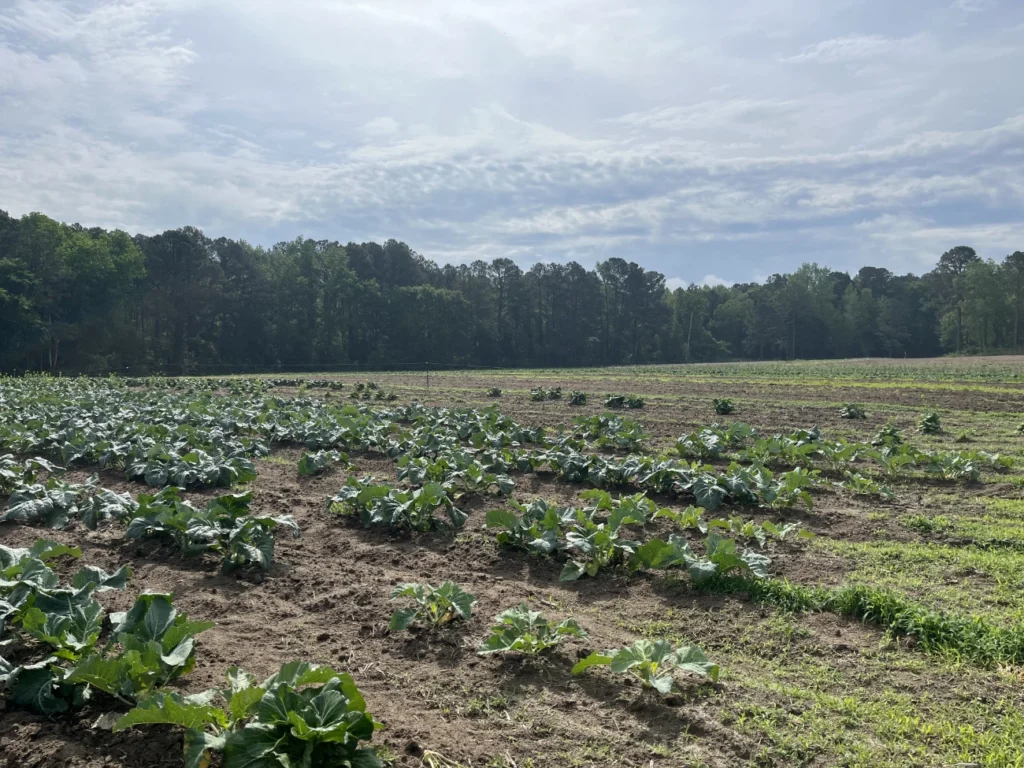
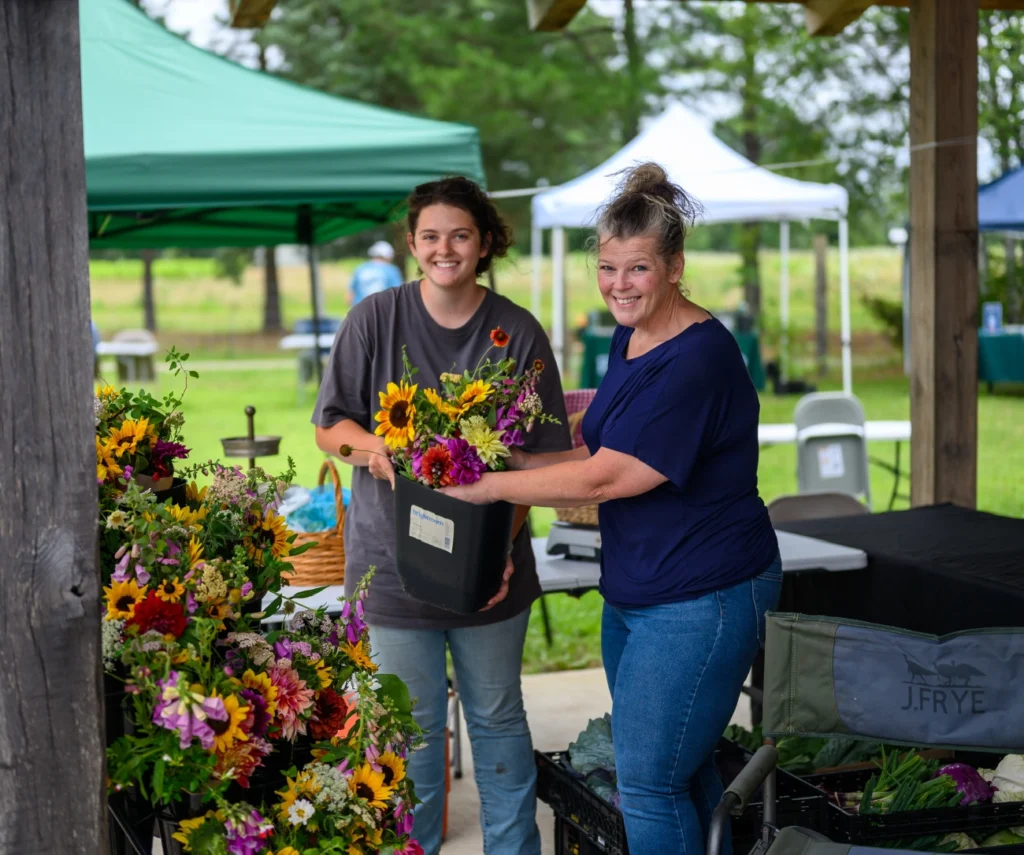
This is not just a land conservation story. It is an economic one. Inspired by their families’ farming heritage in Lee County, Hunter and Aaron Ayers knew they wanted to start their own family farm. They purchased the 75-acre tract in 2022 and immediately looked into conservation easements as a way to offset the cost and secure funds for their operation. The Ayers’ farm produces a wide range of crops and raises livestock. And by selling at their local farmers market and at local grocery stores like Piggly Wiggly, the Ayers are emphasizing the importance of community-based agriculture. This kind of local agriculture keeps dollars circulating in the community, supports small businesses, and strengthens local food systems.

“As a community, we need to realize that working together to perpetuate woodlands and farmland is the only way to be successful. The value added to the tract for the next generation is immense,” said the Ayers.

“I love meeting the landowners that care about their land,” Melissa Clunan, Land Protection Manager at TLC, said. “The Ayers are unique in that they are young farmers who know they want to farm their entire careers. They are committed to keeping this land exactly as it is.”

See Ayers Family Farm in Action:

Facebook: https://www.facebook.com/p/Ayers-Family-Farm-100094378571812/
Instagram: https://www.instagram.com/ayersfamilyfarmnc/
YouTube: https://www.instagram.com/ayersfamilyfarmnc/

At the same time, farmland in Lee County declined by 11% between 2017 and 2022. While the number of farms increased, average farm size decreased, indicating that farms are being subdivided and large-scale agriculture is becoming more difficult. Without strategic investment, this trend will continue.

Local Impact: What This Means for Lee County

The Ayers Family Farm sits in a part of Lee County experiencing rapid change and at real risk for development. Within just five miles of the property, at least four new subdivisions are under development. Instead, it is now permanently protected and will remain a working farm for generations.

“Development pressure is increasing exponentially in Lee County. Land values are still relatively low compared to the rest of the Triangle, which has attracted large-scale industries such as pharmaceutical companies,” said Clunan. “The proximity to Holly Springs and Apex to the north of the county, and Pinehurst and Fort Bragg to the south, is causing increased residential development to spread from both sides. The land the Ayers protected with an easement had another offer from a developer, but it fell through, and the Ayers were able to purchase the farm.”

This project also marked the first time Lee County’s Farmland Preservation and Protection Fund was used, helping cover transaction costs and strengthening the overall funding package.

According to Clunan, timing was critical. “I think the timing of the county’s investment is really significant because it is proactive. The county commissioners and the community can see that growth is ramping up similarly to other counties in our region.”

Local investment like this does more than protect one farm. It positions counties to compete for additional state and federal funding, bringing more resources back to the community.

Strategic Importance: Agriculture, Growth, and Long-Term Planning

Lee County is at the crossroads of major growth corridors, with pressure coming from the Triangle to the north and military and residential expansion to the south.
According to the American Farmland Trust, the county could lose up to 30 percent of its farmland by 2040. Read more about this real risk to our state.

“North Carolina as a whole is projected to lose 1,197,300 acres to development by 2040, making it the second-most threatened state in the nation for farmland loss, behind only Texas,” said Clunan. “This is a critical time to invest in farmland preservation to achieve balanced growth that will sustain a healthy future for the Triangle.”

This is not just about land. It is about long-term planning. The Ayers farm is a combination of crop fields and mixed hardwood and pine forest, with a stream running through it. Along with this scenic open space, 80% of the farm is on prime soils or soils of statewide importance, making it among the most productive for agriculture. Losing this farm to development would cost North Carolina critical farmland, local food, wildlife habitat, and water quality protection, as well as important agricultural heritage.

Once developed, they are gone for good. Protecting working lands ensures that North Carolina can continue to produce food, support rural economies, and maintain the balance between growth and preservation that makes our state strong.

Lee County has a rich agricultural heritage, and the Ayers have a deep respect for that. “The hard work put into this sandy land is evident, and we want to continue the legacy started by not only our ancestors, but all of Lee County farmers,” explained Hunter and Aaron Ayers.

With the permanent protection of this property, the Ayers land will be able to remain a farm forever.

Fiscal Responsibility: A Proven, Leveraged Investment

The Ayers Family Farm project highlights how conservation funding works in practice. ADFPTF provided the funding needed for them to place the farm under easement, securing it forever. Lee County added support through its local farmland fund.

ADFPTF funding made the Ayers Family Farm project possible by funding the entire easement purchase, matched with a generous 25% bargain sale from the Ayers. This means that with ADFPTF support, TLC was able to provide the Ayers with a cash payment for their easement, which was critical for them as young, early-career farmers who needed funding to grow their farm operation. This is a true partnership. State funding does not act alone. It brings together local governments, landowners, and private contributions to make projects possible.

In this case, state support was essential. Without funding from the trust fund, the project would not have moved forward. While the Ayers were committed to keeping their land in agriculture, they needed financial support to place a permanent easement on the property. Development offers were already on the table.

Demand for this program continues to grow. In the most recent funding cycle, more than 100 applications were submitted, totaling nearly $50 million in requests. Only seven projects were funded.

That gap represents farms across North Carolina that could be protected if resources were available.

A Practical Investment in North Carolina’s Future

The Ayers Family Farm is one example, but it reflects a broader reality across North Carolina.

Farmers want to protect their land. Communities want to maintain their rural character. Local governments are stepping up with support. But without consistent and sufficient state funding, many of these opportunities will be lost.

Conservation trust funds are not optional. They are a proven tool for protecting one of North Carolina’s most important economic sectors.

Among NC’s conservation trust funds, ADFPTF has the lowest recurring funding. This year, Land for Tomorrow is asking legislators to increase recurring funding for ADFPTF to $25 million from $5 million, enabling many more land protection projects to move forward. This increase would be a significant step toward meeting demand for funding for farmland projects and toward investing in one of North Carolina’s largest economies.

As Clunan shared, there is already a strong pipeline of farmers ready to participate. The need is clear. The demand is growing. The opportunity is now.

North Carolina’s farms are more than open land. They are a cornerstone of our economy, our heritage, and our communities. As development pressures continue to grow, protecting working farmland is a practical investment in the state’s long-term success.

The Agricultural Development and Farmland Preservation Trust Fund helps keep farms in production, supports family farmers, and strengthens local economies across North Carolina. These projects ensure that agricultural land remains productive, supports nearby military installations, and contributes to the stability of rural communities.

Increasing ADFPTF funding will allow TLC and other land trusts and counties across the state to expand land protection momentum and protect more critical farms and natural lands. “We can’t wait,” said Clunan. “North Carolina is consistently one of the fastest-growing states in the country, with people relocating here for our great schools, career opportunities, and natural beauty. Conservation easements are the best tool for permanent protection of working lands, and increasing funding for ADFPTF will enable us to ensure a sustainable future for North Carolina.”

Land for Tomorrow and its partners are seeing firsthand how conservation trust funds deliver real results in every region of the state. But the demand for these projects continues to outpace available funding.

To keep North Carolina’s farms working and communities strong, continued and increased investment in the Agricultural Development and Farmland Preservation Trust Fund is essential. It is a fiscally responsible approach that leverages public and private dollars, protects a key industry, and preserves the lands that define our state.

Investing in conservation trust funds is an investment in North Carolina’s economy, its people, and its future.

Member Profile: Catawba Lands Conservancy and Carolina Thread Trail

North Carolina’s conservation trust funds are doing more than protecting land, they’re delivering real results for our communities, economy, and way of life. We’re grateful to the North Carolina General Assembly for its continued investment in these proven programs.

“Grant funding from the conservation trust funds has enabled us to protect hundreds of acres that we otherwise wouldn’t have been able to conserve,” says Bart Landess, Executive Director of Catawba Lands Conservancy and Carolina Thread Trail. “Land in the Southern Piedmont around Charlotte is increasingly expensive, and it’s only through partnerships and support from the trust funds that we have been able to exceed 18,000 acres conserved.”

That impact is showing up across the state. In Catawba County, what was once a complex land transaction is now Mountain Creek Park, a growing community asset with trails for hiking, running, and mountain biking. Projects like this strengthen local economies, expand outdoor recreation, and improve quality of life.

As North Carolina continues to grow, the need to protect working lands and natural resources is only increasing.

“North Carolina is a state with incredible natural resources and a rich agricultural legacy,” Landess adds. “As rapid growth and development take place, it’s important to preserve our unique landscapes and agricultural lands before they disappear. The trust funds are a critical tool to ensure these places continue to exist.”

Behind this success is strong leadership and coordination.

“Land for Tomorrow provides critical leadership on state policy relating to land protection,” Landess says. “Without that leadership pushing for funding, we wouldn’t have seen the same level of success in conservation and agricultural projects.”

As budget discussions move forward, it’s critical to protect funding for the state’s conservation trust funds so they can continue delivering results for communities across North Carolina. Supporting the conservation trust funds is a smart, practical investment in our state’s future.

Learn more in our LEARN Section

Big Win for Friends of the Mountains-to-Sea Trail

North Carolina’s Land and Water Fund is helping protect one of the most important coastal landscapes in our state. This is a significant milestone for eastern North Carolina and a clear example of how strategic funding and strong partnerships deliver lasting results for our state.

Friends of the Mountains-to-Sea Trail and North Carolina Coastal Federation recently announced the acquisition of nearly 800 acres along the North River in Carteret County. The newly acquired property will provide a critical link for the Mountains to Sea Trail, eventually creating approximately 11 miles of new, off-road trail miles and greatly expanding the trail’s presence in this area.

This project is a clear example of how state investment makes big outcomes possible. Funding from the Complete the Trails Program, created by the North Carolina General Assembly, helped move this long-priority project forward. An additional $1M grant from the N.C. Land and Water Fund and funding from the U.S. Navy brought together the partnerships needed to complete the acquisition.

Projects like this show how conservation funding works as a smart investment. By leveraging partnerships, these dollars go further, helping protect large-scale landscapes that support water quality, wildlife habitat, and coastal resilience and develop recreational opportunities.

Thank you to Senator Norman Sanderson and Representative Celeste Cairns for your service to North Carolina’s coastal communities.

To read more about this project, visit https://mountainstoseatrail.org/2026/04/land-acquisition-carteret/


2026 Budget Priorities

North Carolina’s natural places and working farms are an important part of our state’s infrastructure and way of life.

These natural places provide clean water, protect wildlife habitat, support agriculture, and power outdoor recreation economies across our communities. Across the state, investments from the N.C. Land and Water Fund, Parks and Recreation Trust Fund, and Agricultural Development and Farmland Preservation Trust Fund help protect the lands and waters that support local economies and quality of life.

  • Outdoor recreation generates $16.2 billion in economic value in North Carolina and supports more than 145,000 jobs statewide, representing 2.1% of the state’s GDP. The outdoor recreation economy in North Carolina has grown 9.6% since 2022. (NC Outdoor Economy Office).
  • More than 20 million people visit North Carolina State Parks each year, supporting local economies and small businesses in communities across the state (North Carolina Division of Parks and Recreation).
  • Agriculture and agribusiness remain North Carolina’s top industry, contributing more than $103 billion annually to the state’s economy (NC State Extension).

Conserving land is not just about protecting nature. It is about protecting critical infrastructure, supporting rural economies, and preserving North Carolina’s way of life.

Land for Tomorrow and its members are working to ensure these conservation trust funds remain strong so they can continue delivering benefits to communities across the state.

Strengthening Conservation Trust Funds:

  • $2M recurring increase for NCLWF. Currently funded at $28M recurring, a $2M increase would bring total funding to $30M.
  • $2M recurring increase for PARTF. Currently funded at $28M recurring, a $2M increase would bring total funding to $30M.
  • $20M recurring increase for ADFPTF. Currently funded at $5M recurring, a $20M increase would bring total funding to $25M

Strengthening Conservation Through Policy:

  • Extend the Conservation Tax Credit. Reinstated in 2024, the tax credit is currently set to expire at the end of 2026.
  • Pass House Bill 647 – Agriculture PUV Conservation

Meet our Land for Tomorrow’s Members who are on the ground protecting our land and water.

Download our 2026 Budget Priorities document


CONTACT US

Kevin Redding
Land for Tomorrow Chair
Executive Director, Piedmont Land Conservancy
Office: (336) 691-0088
kredding@piedmontland.org