Jacksonville Daily News: Senator Brown’s efforts not unnoticed

A letter to the Jacksonville Daily News editor praising Senator Brown’s leadership to fund the conservation trust funds.

To the editor:

With the recent adoption of the state budget, legislators have made a renewed commitment to our citizens that they are willing to protect our state’s natural resources and scenic beauty, while promoting rural economic development. Senator Harry Brown, a longtime champion for conservation, has worked tirelessly to protect our state’s military bases, water resources and farms and to provide resources for state and local park projects.

His support for an additional $22.7 million in the budget for the state’s three conservation trust funds will help protect working family farms and forest near military bases and promote rural economic development through expanded outdoor recreational opportunities. Under the leadership of Senator Brown, North Carolinians can have peace of mind knowing their favorite streams, rivers, and lakes will be protected.

Senator Brown wants our children and our children’s children to have the same beautiful North Carolina landscapes to admire as we do today, while also strengthening rural economies. Thanks to his efforts, outdoor recreation opportunities, military bases, farms and clean water will be here for generations of North Carolinians to come.

Billy Sewell, Jacksonville

Originally published on July 10, 2018

Times-News: Ross, Gunn help protect NC natural resources

A letter to the Times-News editor praising Representative Ross and Senator Gunn on their leadership to fund the conservation trust funds.

North Carolina lawmakers are fighting to preserve the qualities that make our state one of the top places to live, work and visit. The recently passed state budget will allocate an additional $22.7 million to North Carolina’s conservation trust funds, which help protect our state’s land and water resources and provide funding for parks and recreation projects, like the Mountain-to Sea Trail. The budget also includes significant increases to preserve working family farms in the Piedmont. Alamance County state Rep. Stephen Ross and Sen. Rick Gunn were strong voices in making this additional funding a reality.

Ross has demonstrated his commitment to protecting North Carolina’s tourism and agriculture industries in his role as chair of the House Agriculture and Natural and Economic Resources Appropriation Subcommittee. He has also been a strong advocate for restoring dedicated revenue sources for the trust funds. Gunn has consistently supported conservation efforts throughout his years in the Senate and has been a champion for the outdoor recreation industry, helping create an outdoor industry recruitment position in the NC Economic Development Partnership. Serving as Co-Chairman of the Committee for Senate Appropriations on Agriculture, Natural and Economic Resources, Gunn has supported land and water conservation time and time again to enhance our state’s economy and quality of life. By stewarding our state’s natural resources, legislators like Ross and Gunn are ensuring North Carolina will continue to be a great place to raise our families and expand recreational opportunities for all our citizens. I appreciate their leadership on conservation and hope they will continue these efforts to benefit future generations of North Carolinians.

Billy Sewell, Jacksonville

Originally published on July 4, 2018.

Brand New Look for Land for Tomorrow

Land for Tomorrow revealed a new logo and website to prepare for the upcoming legislative session.

The new branding will position the coalition to work with both parties towards bipartisan collaboration so all can successfully meet North Carolina’s conservation needs.

The new logo depicts the land that conservation trust funds work so hard to protect. From the mountains to the sea and all the beautiful farm land in-between, Land for Tomorrow has worked to increase conservation efforts since 2003. The coalition works to ensure that the state’s conservation trust funds – Clean Water Management Trust Fund (CWMTF), Parks and Recreation Trust Fund (PARTF) and the Agricultural Development and Farmland Preservation Trust Fund (ADFPTF) – are well funded.

The new website – land4tomorrow.org – will continue to grow to house useful and up-to-date content to help legislators and their aids see the value in the state’s conservation trust funds. There are also ways for concerned citizens to better understand the importance of the conservation trust funds and how to get involved.

The coalition would like to thank all who contributed to the successful launch of this website and rebrand.

Visit our About Us page to learn more about the conservation trust funds: https://www.land4tomorrow.org/about/

Preserving The Lindale Farm

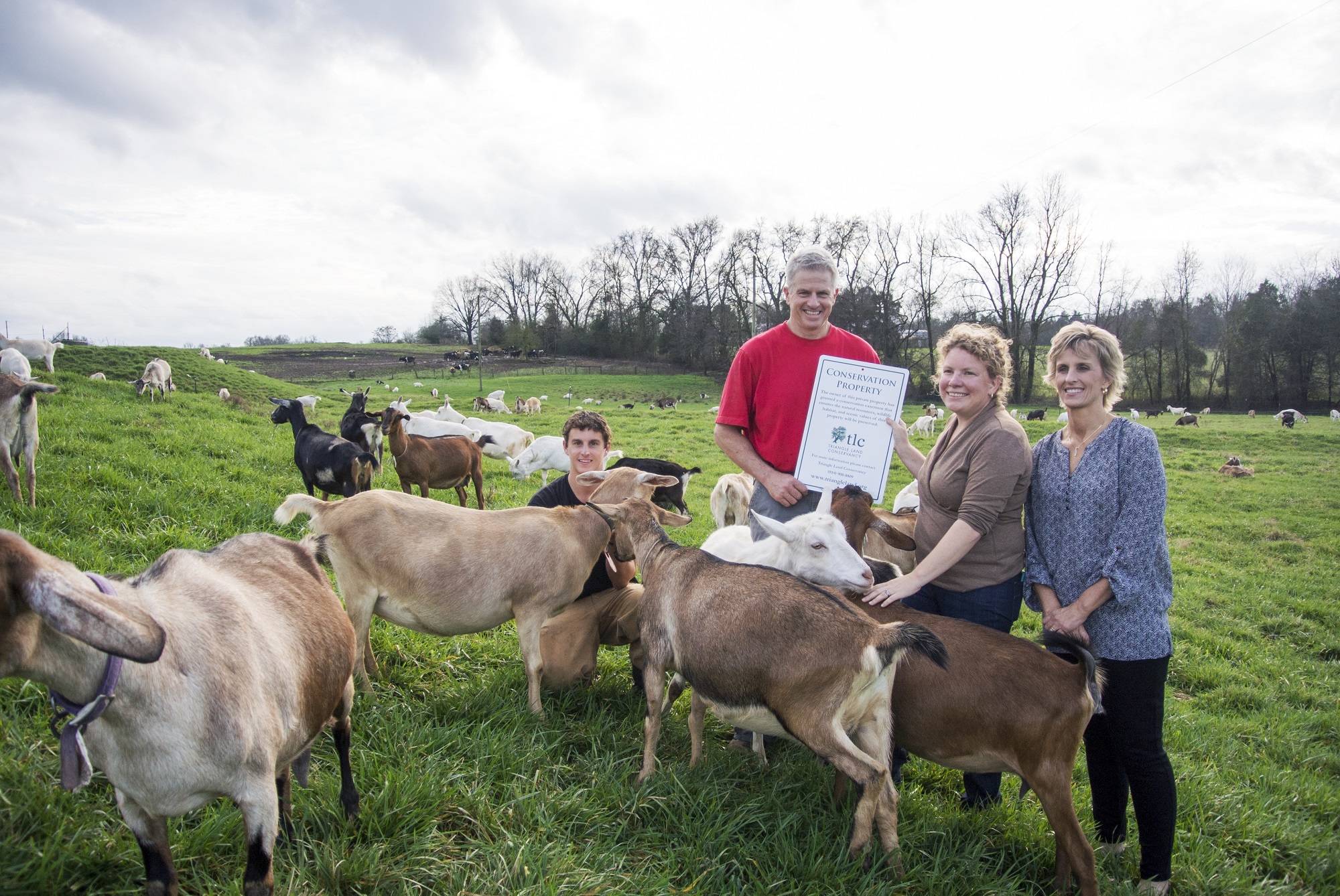
The Lindley family has operated their 182-acre dairy farm in Chatham County since the late 1800s.

Neill Lindley, the fifth generation of farmers in the family, still owns and runs the farm today. Lindley took over his family’s farm with his wife Cori in 1982 after graduating from NC State University. In 2009, along with help from his father Darryle and son Neill Jr., the Lindleys began to transition away from traditional practices, making their farm organic and sustainable.

Part of that process involved signing their land into a conservation easement with the Triangle Land Conservancy (TLC). The easement allows the Lindleys to continue farming, and it protects their land from future development.

“We definitely try to work with landowners that use sustainable practices,” said Leigh Ann Hammerbacher, the associate director of conservation and stewardship at TLC.

TLC holds conservation easements on nearly 700 acres of farmland in the Silk Hope area of Chatham County. The American Farmland Trust estimates that 40 acres of the nation’s farmland is lost to development every hour. In Durham, Orange and Wake counties, on average one of every five acres of farmland has been lost to development over the past 20 years. These easements play an important role in protecting farmland from that development, and they are also important in helping provide farmers with much-needed funding.

Hammerbacher said the Lindley family invested the funding they received back into the Lindale Farm, aiding in the transition to more sustainable practices. Now that the farm is fully organic, she said the Lindleys are doing very well.

“This farm is one of the most successful farms in the area,” said Hammerbacher. “And they definitely believe that switching to the organic market, particularly in the dairy industry, has brought them more stability.”

The Lindale Farm is a part of Organic Valley, the nation’s largest organic farmer cooperative. Farmers sell their products locally in all 50 states, and even export to 25 countries worldwide.

Read more stories from the 2017 Conservation Yearbook here.

Conservation is Crucial to Attracting the Best and the Brightest

Red Hat is an international leader when it comes to enterprise open source software. That means the company must attract highly educated, young professionals who are in big demand. To stay on top, Red Hat must appeal to those men and women. Red Hat CEO Jim Whitehurst says the quality of life found in the community is an important part of that appeal.

“Our biggest competition isn’t for our customers, it’s for the best talent,” he explains. “The best and brightest have their choice of where to work – both companies and locations. More and more, we are finding that quality of life is a major determinant of where top talent chooses to live and work. I am constantly asked by people we are recruiting about the recreational opportunities in North Carolina.”

That’s why Whitehurst, who sits on the Board of Directors for The Conservation Fund, supports public funding for land and water conservation. “NC is situated in a great area that spans mountains to beaches, but we need to ensure that some of those areas are preserved and accessible for recreational use,” he says.

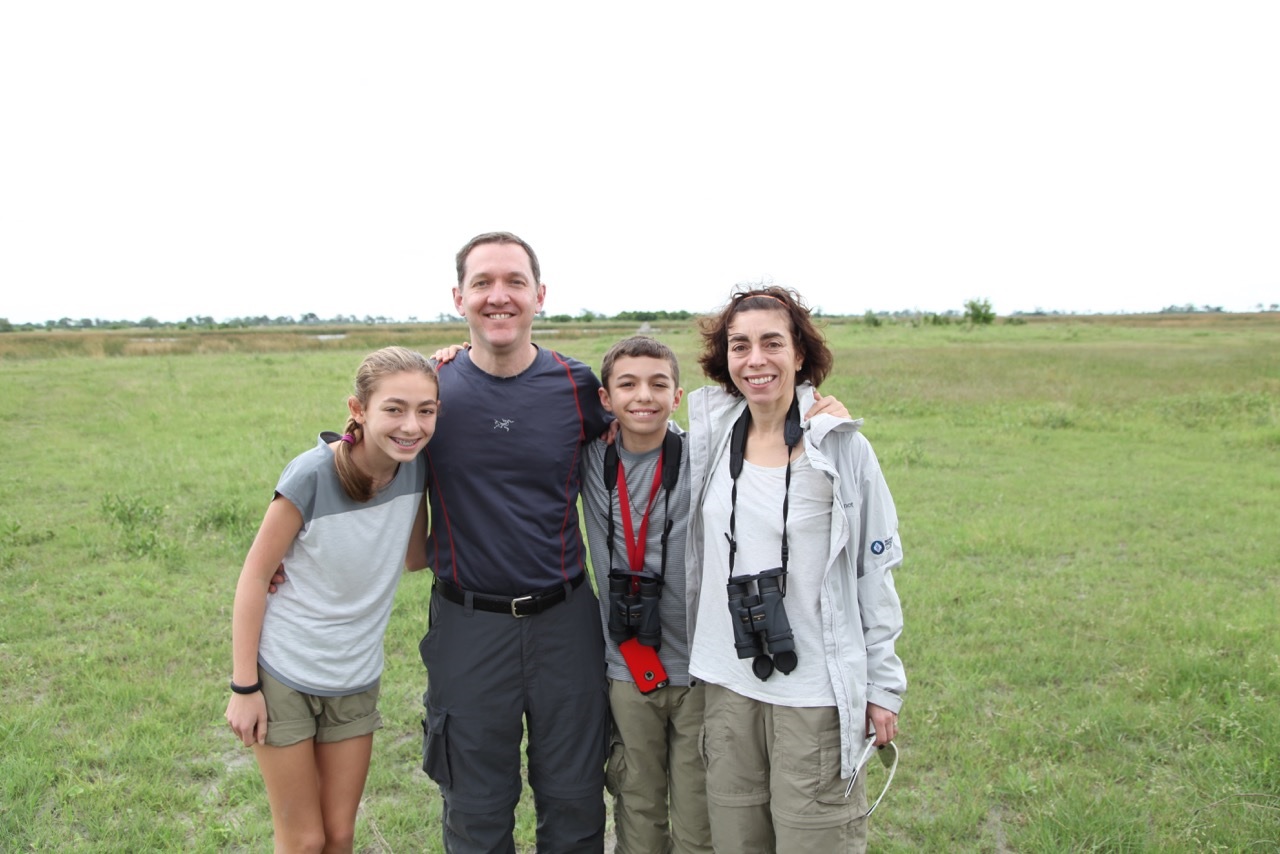
Even though he works in a high-tech business, Whitehurst says getting out in nature is important for everyone’s wellbeing. “I live and work in the hectic high tech world. It is exciting and fast-paced, but also exhausting. My kids live a similar world – with iPads at school and video games at home,” he explains.  “Some of our best quality family time is when we are able to get away from it all. Being in nature allows our family to build deeper bonds. It gives us time to reflect, but also be together without the myriad distractions of our normal everyday lives.”

His love of nature began with his grandfathers and parents fishing and hiking as a family.  “I’ve been lucky enough to be able to do this with my kids. Going forward, I want to make sure that I can do the same with my grandchildren,” he concludes. “And I want to make sure that others who may not have the same capacity to ’hop on a plane’ also have those opportunities nearby where they live.”

Read more stories from the 2017 Conservation Yearbook here.

Post date: April 1, 2017

Land for Tomorrow Urges Increased Conservation Funding Following Release of SB 257, Appropriations Act of 2017

Land for Tomorrow thanks the General Assembly for continuing to fund the Clean Water Management Trust Fund, Parks & Recreation Trust Fund, and Agricultural Development & Farmland Preservation Trust Fund in the Appropriations Act of 2017.

However, Land for Tomorrow is concerned that in a year of budget surplus, the General Assembly is appropriating fewer dollars for conservation, which more than 70 percent of North Carolinians broadly support.

The Clean Water Management Trust Fund (CWMTF) and Parks & Recreation Trust Fund (PARTF) are both appropriated fewer dollars in 2017 than in 2016. While the budget does increase funding for the Agricultural Development & Farmland Preservation Trust Fund, the funding levels are inadequate to match US Department of Defense funds to protect our military bases from encroachment and to match US Department of Agriculture funds to protect and restore farmland in Western North Carolina and the Piedmont, where development pressures are the greatest.

  • The General Assembly appropriated $22.4 million to CWMTF in 2016-17 and is appropriating $18.3 million in 2017-18 (a 18% decrease).
  • The General Assembly appropriated $22.7 million to PARTF in 2016-17 and $19.7 million in 2017-18 (a 13% decrease).

Land for Tomorrow will continue to work with legislative leaders to protect and restore water quality, preserve family farms that produce local and fresh food, to maintain the training mission of our military bases, and to support the $28 billion outdoor recreation industry in NC.

135 local governments, conservation organizations, and state agencies requested nearly $68 million from CWMTF in 2017. Those organizations would provide almost $165 million in matching funds, more than doubling the state’s investment. Sixty-four local governments requested $19 million from PARTF in 2017 and provided $51 million in matching funds, matched nearly three times.

Earlier this year, the US Department of Defense awarded NC a nearly $10 million Readiness and Environmental Protection Integration (REPI) Challenge Grant. The State has to match these funds dollar for dollar or they cannot be used in North Carolina.

Also earlier this year the US Department of Agriculture awarded Blue Ridge Forever, a coalition of the 10 land trusts in Western North Carolina, $8 million to protect and restore farmland in Western North Carolina. These funds must also be matched by state and private funds.

Land for Tomorrow will continue to work with legislators in the 2018 Short Session to improve funding levels for the trust funds to adequately meet the demand of conservation projects that benefit North Carolina communities and citizens.

Post date: June 21, 2017

Proposed Increase to Land and Water Conservation Funding a Win for NC

The Land for Tomorrow coalition commends Governor Cooper for providing increased, reliable funding for land and water conservation in his recommended budget. Restoring a portion of the real estate conveyance tax to the state’s conservation trust funds as it was originally intended will help provide stable funding for the Clean Water Management Trust Fund, the Parks and Recreation Trust Fund, and the Agricultural Development and Farmland Preservation Trust Fund.

The Governor’s budget proposal aligns very well with Land for Tomorrow’s goals to increase recurring appropriations and re-establish a dedicated revenue stream to stabilize the trust funds, by dedicating a portion of the state’s share of the deed stamp tax.

The dollars appropriated by the state and granted by the Clean Water Management Trust Fund, Parks and Recreation Trust Fund, and the Agricultural Development and Farmland Preservation Trust Fund are leveraged dollar for dollar to build a healthy and thriving economy for North Carolinians. Continuing to invest in the state’s conservation trust funds is critical to continuing to establish North Carolina as an exceptional place to work, live and raise a family.

The members of Land for Tomorrow commend the Governor’s recommendation to add an additional nonrecurring $10 Million to the ADFPTF to help the state match federal US Department of Agricultural and Department of Defense farmland preservation funding; and allocate 35 percent of the apportioned Deed Stamp Tax proceeds to CWMTF and PARTF and 15 percent to the ADFPT and NCHTF, equating to an additional $6.55M each to CWMTF and PARTF and $2.8 M to the ADFPTF in recurring revenues.

We look forward to the coming short session where we will work with members of the General Assembly to establish an amended budget that continues its support of strong investment in conservation in support of the agriculture, military, tourism, hunting and fishing, and a $37.6 billion outdoor recreation sector that supports 260,000 North Carolina jobs.

###

Post date: May 10, 2018

Hickory Daily Record: Investing in Conservation is Smart Business

Brad Lail, Hickory resident and City Councilman, believes in the power of investing in conservation priorities.

“As the members of the General Assembly work on the state budget, I hope they will continue and grow that support because it is good for the state’s bottom line.” – Brad Lail

Read the entire opinion published by the Hickory Daily Record.


Post date: May 14, 2018

General Assembly Budget Support for Land and Water Conservation Praised

The Land for Tomorrow coalition commends the Legislature for providing more than $22 million in additional funding for the state’s three conservation trust funds. These additional funds help keep the Clean Water Management Trust Fund and the Parks and Recreation Trust Fund at level funding from recent years, which will enable conservation groups to continue to work with our state partners to protect the state’s valuable natural resources.

In addition, the significant increase to the Agricultural Development and Farmland Preservation Trust Fund will provide matching funds for two recent federal grants, including one that will help protect land around military bases from incompatible development, and another one that will help protect family farms in the North Carolina mountains.

“We appreciate the legislature’s support of these critical conservation trust funds,” said Bill Holman, Chairman of the Land for Tomorrow Legislative Committee. “We look forward to working with the legislature in future years to continue to increase funding for these trust funds.”

Land for Tomorrow is a coalition of conservation groups and parks and recreation advocates, who partner with the state and local governments and private landowners to conserve North Carolina’s land and water resources, preserve farmland, protect military bases, expand hunting and recreation opportunities, and sustain North Carolina’s economy.

###

Post date: June 6, 2018